Organic Corner

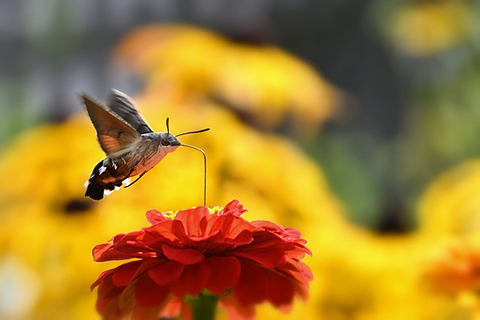
Hummingbird hawk-moth. Photo by jggrz from Pixabay.

By Organic Certification Team Leads

The Organic Services department has made significant structural changes to provide timelier service to our clients. To clients who may be waiting to hear from us: We have not forgotten you! To address our timeliness, we are not accepting any new clients at this time, and we have reduced our service area. Please reach out to us if you need your certificate. We apologize for our tardiness and pledge to improve our customer service in 2025.

Handler renewals—MCIA will be working toward changing all handler renewal dates to winter each year, so that we can inspect in the calendar year. This is a work in progress and may not roll out immediately. In general, this change should not affect the timing of your inspection, but for some handlers it will mean that you will be applying shortly after the last application.

For any handlers who are exporting or importing, please be aware that MCIA now requires you to complete an International Trade Addendum.

The new Organic Livestock and Poultry Standards (OLPS) rule goes into effect January 2, 2025. A few of the new requirements include temporary confinement allowances including confinement for under 32° F or above 90° F, specific space and stocking density requirements for indoor and outdoor poultry spaces, weekly ammonia testing for poultry, and specific perch and exit door requirements. Review NOS §205.241 for the new rules.

In other news, in September MCIA hosted a delegation from Taiwan, accompanied by USDA National Organic Program (NOP) representatives, who were conducting a peer review of the NOP. The group shadowed Lauren Martin on an organic inspection at Keith Speltz’s farm. In addition to the inspection, Keith Speltz invited the group to his farm’s sesquicentennial celebration. Many thanks to Keith Speltz for his generosity and congratulations to him on his farm’s 150-year anniversary!

Subsequently, the officials from Taiwan informed the NOP that they had a very favorable impression of the accredited certifiers and the organic inspections they observed while in the U.S. In October, the NOP recognized MCIA with a Certificate of Appreciation for “exemplary professionalism, excellence, and generosity” throughout the planning and execution of the peer review.


Organic Corner

Barn swallow. Photo by sharkolot from Pixabay.

By Michelle Menken, Organic Services Manager

The USDA National Organic Program (NOP) conducted its semi-annual audit of MCIA in July. Two auditors from the NOP were here in the office for a week, reviewing files and procedures. One focus of this audit was how we are implementing the new rule changes, Strengthening Organic Enforcement (SOE) and the Organic Livestock and Poultry Standard (OLPS).

They noted several findings that were easy fixes, and we have updated some of our forms already. Many of the remaining findings have to do with developing written policies for various aspects of how the accreditation staff do their work, such as staff training policies and when to issue Noncompliances vs Certification Letter notes and reminders.

The NOP clearly believes that we should be issuing more Noncompliances. Notices of Noncompliance are issued when an operation is not following the requirements of the regulations, such as not documenting an organic seed search, or having incomplete or not auditable records.

If you receive a Noncompliance, you must answer by the date in the letter. The response should say how you are going to correct the problem listed in the letter. If you do not understand the Noncompliance, please contact MCIA. Not responding can lead to a Proposed Suspension.

For handlers and processors, we have added some new forms due to SOE. One is the Supplier’s List. Handlers must ensure that their suppliers are certified organic. You can check suppliers’ certificates on the Organic Integrity Database (OID). You may still need to contact the supplier for product addenda if the ingredients you want to source are not listed on the certificate, or if we need to know the product category (100% Organic or Organic). Importers must be certified, and each imported shipment of organic products must be accompanied by an Import Certificate. Review NOP205.273 for information on imports.

Avian living conditions and transport and slaughter requirements were added under the OLPS changes. These give specific requirements for poultry housing and stocking densities. This includes the specific required indoor and outdoor square footage, amount of perch space, and exit areas for pullets, layers, and broilers, turkeys, and ducks. All poultry operations must test weekly for ammonia levels in their barns. Review NOP205.241 for information on new poultry requirements.


Organic Corner

Photo by Level_Up_Filming from Pixabay.

By Michelle Menken, Organic Services Manager

Organic Corner

This has been a really busy start to the year for us. We have hired three new people—one in April, one in May, and one who started June 1: two certification specialists/inspectors and one administrative specialist. This means we are spending a lot of time training people. Plus, everyone here has been training because of the three big rule changes to the Organic Standards.

The first rule change was the Origin of Livestock (OOL). It says a dairy operation can only transition a dairy one time and transitioned dairy animals can only be used for milk production on that farm. They cannot be sold as organic. If you have transitioned animals on your farm, we have marked them as “TRANSITIONED” on your Livestock List. If you had an organic dairy in the past and want to start a new organic dairy, you must now buy organic animals to build the new herd.

The second rule change is the Organic Livestock and Poultry Standard (OLPS), which sets standards for livestock housing, outdoor access, and stocking density rates indoors and out. It is primarily for poultry and hogs. It lists maximum numbers of birds per square foot for pullets, layers, broilers, and other poultry. OLPS requires that ammonia levels are kept below 20 ppm in poultry barns. So, poultry operations and inspectors should be doing testing in barns this year.

The third rule change is Strengthening Organic Enforcement (SOE). Every operation is now required to have a Fraud Prevention Plan (FPP) as part of their organic system plan. We created an FPP form and information sheet that went out with renewal packets to all organic producers. If you did not get the FPP form, please contact the office. SOE requires us to spend more time reviewing supply chains (which is looking at the records that show who you buy from and who you sell to). For livestock operations this means we will be looking at all your purchased feed records this year at inspection. For handlers, we will be looking to see if you have clear records of all your suppliers and traceable records of purchases and sales. Preventing fraud is everyone’s responsibility. Make sure you are getting and giving good receipts: receipts should identify products bought and sold as “organic,” use a lot number, list the quantities, include the date of the sale, and include the buyer’s and seller’s names. We have a Bill of Lading/Clean Truck form you can use. Ask us for copies if you need them. For livestock sales, be sure you identify individual animals (ear-tag number or a name that matches what is on your Livestock List) and say if they are eligible for organic slaughter or not.

All crop and livestock applications should now be in. Starting June 1, we will be charging late fees. If you did not get an application, call us now. The mail has been bad this year. Several people have called us who said they did not get their applications. Files are going out to inspectors now, so the inspection season is starting.

The NOP will audit MCIA’s organic program this year in July. This inspection happens for us every two and a half years and takes a week. The auditors will follow two of our inspectors on inspections—one handler and one crop farm this year. Then they select files here at our office to be sure we have been keeping complete records.


Environmental Initiative Recognizes Tessa Parks as Emerging Leader

Tessa Parks. Photo courtesy of Environmental Initiative.

Congratulations to Tessa Parks, recipient of this year’s Environmental Initiative Emerging Leader award! The award “recognizes an individual under the age of 30 working in cutting-edge ways to build partnerships and innovative solutions to address environmental health or environmental justice challenges.”

Tessa and her husband own and operate W.T. Farms, which is located in southern Minnesota. They raise Holstein steers and run a custom haying service. Tessa is also active in the Minnesota Farmers Union, recently becoming president of the Rice County Farmers Union chapter.

Of course, here at MCIA, we know Tessa best for her work as an organic certification specialist/inspector in the Organic Services department.

Read more about Tessa’s award at the Environmental Initiative’s website: https://environmental-initiative-awards.org/winners/2024/emerging-leader/tessa-parks/.


Organic Corner

By Michelle Menken, Organic Services Manager

Photo by mariuszople from Pixabay.

This has been a really busy start to the year for us. Three big rule changes occurred, which means we must do staff training and update most of our forms.

The first change is the dairy transition rule, which went into effect last year. You can now only transition a dairy one time and transitioned dairy animals can only be used for milk production on your own farm. They cannot be sold as organic.

The second change is the Organic Livestock and Poultry Standard (OLPS), which sets standards for livestock housing, outdoor access, and stocking density rates—indoors and out. It is primarily for poultry and hogs. OLPS requires ammonia levels to be kept below 20 ppm in poultry barns. So, expect inspectors to do testing in some barns this year.

The final rule change is Strengthening Organic Enforcement (SOE). Every operation is now required to have a Fraud Prevention Plan (FPP) as part of their organic system plan. We have created an FPP form and information sheet that has gone out with renewal packets to all crop and livestock producers. If you did not get the FPP form, please contact the office. We will contact handlers individually to send them FPP forms.

We will mail 2024 crop and livestock renewal applications by the end of this week. We have some 2023 files left to finish and certificates to issue, so not all renewal packets will include a Certification Decision Letter.

We are currently seeking additional employees and plan to do interviewing soon. I think we have some good potential candidates. However, if you or someone you know might be interested, please visit the Job Openings page of the MCIA website: https://www.mncia.org/job-openings/.


MCIA Seeks Organic Administrative Assistant

Photo by Nicolas Baumert: Kaedesis from Pixabay.

Minnesota Crop Improvement Association is seeking qualified candidates for the position of Organic Administrative Assistant.

At MCIA, the organic administrative assistant supports day-to-day operations of our busy and growing Organic Services department by answering and directing telephone calls; preparing, distributing, and processing certification applications; processing inspection reports; issuing invoices; recording payments; and more.

MCIA’s office is located on the Saint Paul campus of the University of Minnesota Twin Cities.

This full-time position offers a competitive salary and full benefits. For more information, including how to apply, visit our Job Openings page.


Organic Corner

Photo by Schwoaze from Pixabay.

By Michelle Menken, Organic Services Manager

This has been a busy year for us. We still have a few files to get out to inspectors. We are working with a couple of new inspectors, so we hope next year we will have enough inspectors to get the work out earlier in the year. We have hired new staff here as well and have worked hard to get them trained. They may be doing some inspections for us next year.

Everyone is now working on final reviews and certificates. We have more than 260 certificates done, which means we have a lot left to complete. The certificates this year are being generated out of the USDA’s Organic Integrity Database (OID). They look very different from our old certificates. The list of organic products will be printed on the reverse side, as will the Canadian Equivalency statement. All certifiers will be required to use the OID to generate certificates starting next year. If you need a Letter of Good Standing to make a sale, please contact us.

The conference season will be beginning soon. We will be at the Minnesota Organic Conference in St. Cloud, Minnesota, January 11–12, 2024. We will have a booth at the Northern Plains Sustainable Ag conference January 25–27, 2024, in Aberdeen, South Dakota, and then we will have a booth at the Marbleseed Organic Farm Conference in La Crosse, Wisconsin, February 22–24, 2024. Please stop by our booths and meet our new staff members.

We will be mailing out calendars and information about some rule changes soon.


Organic Corner

Image: PublicDomainPictures from Pixabay.

By Michelle Menken, Organic Services Manager

We have been busy finishing the last of this year’s crop and livestock inspections. At the time I’m writing this, mid-September, we have about 25 files left to send out to inspectors and plan to get those out by the end of the month. We will also be working on getting handler files out to inspectors so they can start setting up fall handler inspections.

We also continue working through final reviews and certificates for 2023. If you have received a bill for the inspection, please pay as soon as possible. We do start final reviews on those who have paid first. Let us know if you need a certificate or Letter of Good Standing to make a sale. Remember, if you have a 2022 certificate, it is still valid, and you can make sales using it until you get the 2023 certificate. Certificates are valid until they are surrendered, suspended, or revoked. If you or your buyer have questions about this, contact the office.

The Cost-Share rebate program is now accepting applications. You can apply to get 75 percent of the certification costs back, up to $750 per scope. You can apply through the Minnesota, Wisconsin, or North Dakota departments of agriculture, or through your local FSA office. The rebate is offered on costs paid for certification between October 1, 2022, and September 30, 2023. For more information, visit: https://www.mda.state.mn.us/orgcertcostshare.

Our new staff members, Tessa Parks and Sarah Lindblom, have taken the IOIA (International Organic Inspectors Association) basic inspector training and will be going out on some inspections this fall for additional training. Lauren Martin and Shauna Ilse will be taking the basic processor inspector training at the end of September. We still have to collect more samples and complete more unannounced inspections, so you may see us on your farm yet this fall. We collect samples from 5 percent of our clients each year.

We appreciate your cooperation throughout the year and if you have any questions, please let us know.


Organic Corner

Photo: © Regents of the University of Minnesota.

By Michelle Menken, Organic Services Manager

I think that 2022 is a year we are all glad is over. Except that it is not over. We still have about 50 reviews to complete and need to issue the last certificates. At the same time, we are moving forward with 2023 so we do not get behind this year. Files are starting to go out and inspectors have started doing farm and livestock inspections.

I am very happy to report that we have hired two new staff members who started June 15. Sarah Lindblom has about 10 years of experience as a vegetable farm operator and has worked with the Sustainable Farm Association for several years. Tessa Parks comes from a family with a long agricultural tradition, has a chemistry degree, and currently runs a small beef operation. We will introduce both of them more fully in the next issue of the Minnesota Seed Grower. We are also working with several new inspectors this year. So, you may be seeing new faces at your inspection.

The NOP’s Origin of Livestock rule is now in full implementation. We have been updating Livestock Lists to identify any dairy animals that were “transitioned.” Any transitioned animal (dairy cow or goat) can only be used to produce organic milk on your own farm. These animals cannot be sold as organic milk or meat animals to another operation.

The NOP published the new Strengthening Organic Enforcement (SOE) final rule January 18, 2023. The regulations have been updated to include the changes. If you access the regulations online, the eCFR will include the changes. MCIA will be working on printing copies to mail out later in the year.

More parties in the organic supply chain will have to be certified, including more brokers who buy and sell raw commodities. Import Certificates will be required for all organic imports. There will be more requirements for audits of sales or purchases of ingredients for handlers at inspections. There are also more requirements for certifier and inspector training. To read the full rule go to: https://www.federalregister.gov/documents/2023/01/19/2023-00702/national-organic-program-nop-strengthening-organic-enforcement. We will probably be updating many of our forms to comply with the SOE requirements.

All renewal applications are now due for crop and livestock operations. If you are not going to re-apply, please contact us to surrender your certification or you may be suspended.


Organic Food Sales Surpass $60 Billion in 2022

organic sales chart

Organic Trade Association survey shows growth pace doubled from the previous year.

Washington, D.C. (May 10, 2023)Organic food sales in the United States in 2022 broke through $60 billion for the first time, hitting another high-level mark for the resilient organic sector. Total organic sales—including organic non-food products—were a record $67.6 billion*, according to the 2023 Organic Industry Survey released Wednesday by the Organic Trade Association.

The organic market grew despite challenging headwinds: inflation pressures tightening consumer wallets, supply chain disruptions caused by the pandemic and global political events, a proliferation of competing food labels in the grocery aisles, and a labor shortage felt acutely by organic producers. Inflation heated up costs across the organic supply chain—indeed, the entire food supply chain—and boosted prices in the grocery aisles. As a result, the organic sector reflected the overall food sector, with the value of organic sales rising even as the growth in the volume of sales for some categories slipped.

The sector’s four-percent growth in sales value was nearly twice the pace of growth in 2021. Organic food sales totaled $61.7 billion, while the value of organic non-food sales hit nearly $6 billion. Certified Organic now accounts for 6 percent of total food sales in the United States.

“Organic has proven it can withstand short-term economic storms. Despite the fluctuation of any given moment, Americans are still investing in their personal health, and, with increasing interest, in the environment; organic is the answer,” said Organic Trade Association CEO Tom Chapman. “Organic’s fundamental values remain strong, and consumers have demonstrated they will come back time and again because the organic system is verified, and better for people, the planet, and the economy.”

Produce Still Leads Organic

Organic produce, often the entry point for new organic buyers, easily held its position as the top seller of all organic categories. Sales of organic produce totaled $22 billion, accounting for 15 percent of all fruit and vegetable sales in this country.

Organic beverages were the second best-selling organic category, reporting $9 billion in sales in 2022, up 4 percent. Organic coffee maintained its position as the biggest-selling organic beverage, up almost 7 percent from the year before, with close to $2.3 billion in sales. Organic soft drinks and enhanced drinks broke through $500 million in sales at $503 million and saw robust growth of almost 14 percent.

“Organic beverages continue to climb. They’re an area where shoppers are willing to experiment and are less price sensitive,” noted Angela Jagiello, Director of Education and Insights for OTA and coordinator of the annual survey. “Soft and enhanced drinks had a great year, with the non-alcoholic trend being a big contributing factor. Many younger shoppers are reducing or eliminating alcohol, and these organic beverages are a celebratory and sophisticated alternative.”

The third highest-selling organic category was dairy and eggs at $7.9 billion, up over 7 percent from the previous year. Organic dairy and eggs now constitute close to 8 percent of the total dairy and egg market. Continued demand and inflationary price increases helped boost the dollar sales in that category; yogurt and eggs both saw double-digit growth, with organic yogurt sales jumping by over 12 percent to $1.5 billion, and organic egg sales by 11 percent to around $1.2 billion.

While the growth pace of organic sales has predictably slowed from the barnburner rates during the pandemic, a wide and diverse smattering of organic products showed outstanding growth as consumers bring organic more fully into their lives. To name a few: organic baby food and formula sales up almost 13 percent to $1.4 billion, sales of organic rice, grains, and potato products up over 10 percent to $387 million, organic dip sales up a big 18 percent to $194 million, and sales of organic pork up more than 10 percent to $63 million.

In the organic non-food category, sales of organic linens and clothing accounted for some 40 percent of sales, recording $2.4 billion in sales for a gain of 2.5 percent. Organic supplement sales held steady with sales of around $2 billion, while organic personal care products rose over 5 percent to $1.2 billion.

Organic Future Is Bright 

The success of organic is not a new story. In the last ten years, organic sales have more than doubled as Americans are eating and using more organic products than ever before.  Total organic sales broke through the $50 billion mark for the first time in 2018, and organic food sales hit $50 billion for the first time just a few years ago in 2019.

“Organic is at that right intersection of environmental and personal health,” said OTA’s Chapman. “Organic brings together the interest in human health and a healthy environment, and that offers organic a positive pathway forward and will help organic businesses withstand challenges in the future.”

This year’s survey was conducted early in 2023 from January 13 through April 4 and was produced on behalf of the Organic Trade Association by Nutrition Business Journal (NBJ). Numerous data sources were compiled to create as complete a picture as possible of the organic industry which consists largely of private companies. Inputs include but are not limited to point-of-sale data, expert interviews, annual report data, and in-depth direct survey data. About 100 companies completed a significant portion of the in-depth survey.

*Based on newly available data for the Convenience Store channel, OTA has updated its data model, and as a result, restated current and historical figures for several food categories.

*

For more information about the Organic Trade Association, visit: https://www.ota.com.