Organic Cost Share Application Period Opens

Organic farmers and handlers are eligible for rebate

Minnesota organic farmers and handlers are encouraged to apply for a rebate of up to 75 percent of their organic certification costs through the Minnesota Department of Agriculture (MDA). The Minnesota Organic Certification Cost-Share Program is now accepting applications through November 1, 2023.

Organic certification is a third-party verification system that assures consumers the organic products they buy are produced in accordance with federal organic regulations. Organic operations must follow National Organic Standards and are monitored through review of their records and on-site inspections at least once a year.

Operations that received certification (or had ongoing certification) between October 1, 2022, and September 30, 2023, are eligible for reimbursement of up to 75 percent of certification-related expenses, with a maximum of $750 per category (crop, livestock, processing/handling, and wild harvest). Funds are available on a first-come, first-served basis and come from a cooperative agreement with the United States Department of Agriculture’s (USDA) Farm Service Agency (FSA).

Interested farmers or handlers can review full program and application details on the cost-share program web page: https://www.mda.state.mn.us/orgcertcostshare. Applicants who do not wish to apply through the MDA may apply through their local FSA Office. Questions can be directed to Cassie Dahl at Cassie.Dahl@state.mn.us or 651-201-6134.

For those transitioning a farm operation to organic, the MDA also offers the Minnesota Transition to Organic Cost-Share Program: https://www.mda.state.mn.us/minnesota-transition-organic-cost-share-program.

*

Read about MCIA’s Organic Services here: https://www.mncia.org/services-programs/organic-services.

Funds Available to Improve Soil Health

Applications for soil health equipment grants due September 15

Applications are now open for the Minnesota Department of Agriculture’s (MDA) Soil Health Financial Assistance Grants.

These grants are available to individual producers, producer groups, and local governments to purchase or retrofit soil health equipment. Grant awards will provide up to 50 percent cost-share, with a minimum award of $500 and a maximum award of $50,000. The 2023 Legislature appropriated $2.375 million for this round of grants.

“Good soil health is important to water quality and our other natural resources in Minnesota,” said MDA Commissioner Thom Petersen. “It’s important to recognize the financial hurdles farmers face when trying to implement soil health practices because of specialized, expensive equipment and machinery. The Soil Health Financial Assistance Grants will help offset equipment costs, helping to expand the number of Minnesota farmers and acres engaged in soil health activities.”

Examples of eligible new or used equipment include, but are not limited to, no-till drills, air seeders, retrofit projects to allow no-till planting, and more. Parts and materials used to retrofit existing equipment are also eligible.

The Request for Proposals and application link can be found at www.mda.state.mn.us/soil-health-grant. Applications are due September 15, 2023. Awards will be announced by January 1, 2024.

This is the first full round of Soil Health Financial Assistance Grants. A pilot program earlier this year awarded $475,000 to 16 individuals and organizations across 15 counties. No-till drills and air seeders were among the most requested pieces of equipment. The pilot program received more than 230 applications for more than $6.5 million—over 13 times the funding available.


Minnesota Dairy Farmers Encouraged to Apply for MDA Funding

Grants available to help cover business planning costs

St. Paul, MN: Minnesota dairy farmers are encouraged to apply for the Minnesota Department of Agriculture’s (MDA) Dairy Business Planning Grant, which has recently launched a revamped application process.

This grant can be used to help cover the costs of hiring a qualified, independent third party to create a business plan for dairy operations. Dairy producers have used grant funds to evaluate the feasibility of expanding an operation, plan environmental upgrades, create strategies to transfer the operation to a family member or other new owner, and other business activities. The grant cannot cover any capital purchases.

“The Dairy Business Planning Grant is one of several tools that the MDA is proud to offer to help alleviate the ever-growing pressures that come with running a dairy operation,” said MDA Commissioner Thom Petersen. “We are committed to supporting these farmers who work hard to produce high-quality dairy products for consumers in Minnesota and beyond to enjoy.”

The grant pays 50 percent of the cost to develop a business plan, up to $5,000. Producers must pay the other 50 percent.

Applications will be funded on a first come, first served basis. The MDA has $80,000 in funds per fiscal year to disperse, which resets every July 1.

To access the full eligibility requirements and access the application, visit the Dairy Business Planning Grant web page: https://www.mda.state.mn.us/dairy-business-planning-grants. Questions can be directed to Kami Schoenfeld at Kami.Schoenfeld@state.mn.us or 651-201-6643.


Deadline Extended for Minnesota Hemp Growers and Processors

Applications must be postmarked by May 31 for 2023 License

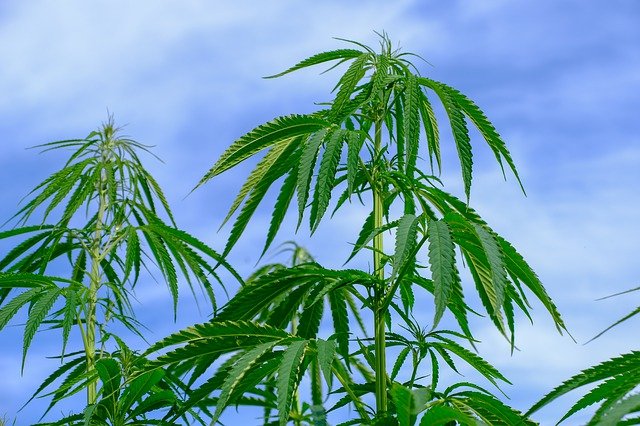
hemp plants
Photo by NickyPe from Pixabay.

Those wanting to grow and process hemp in Minnesota in 2023 have additional time to apply for a license with the Minnesota Department of Agriculture (MDA). The deadline to apply has been extended to May 31 to accommodate all potential applicants that are waiting on legislative action on cannabis. To date, over 230 people have applied for an MDA hemp license.

The online application for growers and processors will only be available until April 30 at www.mda.state.mn.us/industrialhemp. Those interested in applying for a license after April 30 will need to complete a paper application. Paper applications can be requested by contacting hemp.mda@state.mn.us. Along with the paper application, first-time applicants need to submit fingerprints and pass a criminal background check. All paper applications must be postmarked by May 31 to be accepted.

This is the eighth year of the state’s Hemp Program. Last year, 293 people held licenses to grow or process hemp. Over 375 acres and 122,040 indoor square feet were planted in Minnesota in 2022.

Growers and processors need to be aware of the following for 2023:

  • The tetrahydrocannabinol (THC) testing fee per grower sample will cost $100.
  • Penalties may be assessed to growers that do not submit Planting and Harvest Report forms.
  • Growers are required to complete a Farm Service Agency (FSA) 578 form for all hemp varieties and locations planted. If a grower fails to submit this data to FSA in the required time, the MDA will not be allowed to sample and test those fields, nor issue a Fit for Commerce Certificate for those hemp lots.
  • A grower license starts at $400.
  • The minimum cost of a processor license is $500.

Anyone growing on tribal lands within a reservation’s boundaries or other lands under tribal jurisdiction (e.g., trust lands off-reservation) must obtain a license from the tribe or the USDA if the tribe does not have an approved hemp production plan.

Questions about the MDA’s Hemp Program should be sent to hemp.mda@state.mn.us or 651-201-6600.


MDA Accepting Applications for Noxious Weed/Invasive Plant Grants

Grant application deadline for counties, municipalities, tribal governments, and weed management entities is March 31

The Minnesota Department of Agriculture (MDA) is now accepting applications for the 2023 Noxious Weed and Invasive Plant Grant. Counties, municipalities, tribal governments, and weed management entities (including weed management areas) may apply for grants to mitigate noxious weeds around the state. To be eligible for consideration, applicants must spend grant funds by June 30, 2023.

Since 2018, the MDA’s Noxious Weed and Invasive Plant Grant has awarded over $1.3 million to fund a variety of activities such as purchasing equipment and supplies, conducting mapping and outreach activities, and hiring private applicators to manage noxious weeds. The MDA has awarded 119 grants, averaging $9,000.

Review the application requirements and find the application on the MDA website: https://www.mda.state.mn.us/plants-insects/noxious-weed-invasive-plant-grant. Applications are due no later than 3 p.m. on March 31, 2023. Questions can be directed to Emilie Justen, MDA Noxious Weed Law Coordinator, at Emilie.Justen@state.mn.us.

The grant program is funded by the Environment and Natural Resources Trust Fund as recommended by the Legislative-Citizen Commission on Minnesota Resources (LCCMR).


Who Is Required to Maintain a Seed Permit?

Friendly reminder to seed sellers: Any person or firm that labels seed for sale in Minnesota must have a seed permit. Permit holders pay fees to the state to support the seed regulatory program.

The permit fee is paid by the labeler making the first sale of seed in the state. Subsequent sales of that lot do not require additional fees. In addition to their responsibility to accurately label seed for sale, seed labelers must also maintain records to allow full traceability of their products, to support their label claims, and a file sample that is representative of the seed sold.

Permit categories and fees are determined by the type, intended use, and amount sold annually. Generally, those that only sell seed labeled by another person or firm do not need a permit. Fees are paid annually or semi-annually, depending on the category of permit.

For more detailed information about the requirements, including application forms, visit the Seed Permits page of the Minnesota Department of Agriculture website: https://www.mda.state.mn.us/plants-insects/seed-permits.


Organic Cost Share Application Period Opens

The United States Department of Agriculture’s Organic Certification Cost-Share Program (OCCSP) is again offering rebates for certification expenses to eligible organic producers and handlers. Both the Minnesota Department of Agriculture (MDA) and the Farm Service Agency’s (FSA) county offices in Minnesota will accept cost share applications and make payments to eligible certified operations.

Minnesota organic farmers and processors can apply for a rebate of up to 50 percent of the cost of their organic certification. The MDA is accepting applications for the Minnesota Organic Certification Cost Share Program from now until November 1, 2022.

Organic certification is a third-party verification system. It assures consumers the organic products they buy are produced in accordance with federal organic regulations. Organic operations must follow National Organic Standards and are monitored through review of their records and on-site inspections at least once a year.

“The yearly cost of certification can range from a few hundred to several thousand dollars,” MDA’s Assistant Commissioner Patrice Bailey said. “This program provides some relief and goes a long way to make organic certification more affordable.”

Funds for the cost share program are available first-come, first-served and come from a cooperative agreement with the FSA.

Operations that received certification (or had ongoing certification) between October 1, 2021 and September 30, 2022 are eligible for reimbursement of up to 50 percent of certification-related expenses, with a maximum of $500 per category (crop, livestock, processing/handling, wild harvest). MDA also offers a similar cost share program for transitioning a farm to organic.

To qualify, applicants must be certified organic by a United States Department of Agriculture-accredited certifying agency, such as Minnesota Crop Improvement Association. New this year will be an online application process. Certified organic farmers or processors can obtain all the program details and necessary materials on the MDA’s website or by calling 651-201-6134. Applicants who do not wish to apply with MDA may apply through their local FSA office.

Additional funding for up to 25 percent of allowable certification costs is available through FSA. That application deadline is October 31, 2022.


MDA Seeks Input Before Next Legislative Session

Two virtual public input sessions offer chance to share ideas

The Minnesota Department of Agriculture (MDA) is gathering ideas as it considers the state’s next biennial budget and is seeking public input. Farmers, food businesses, and others impacted by food and agriculture systems are all invited to share policy, funding, and program suggestions.

The MDA is hosting two virtual public input sessions where people can share their ideas directly, in addition to an online form for written submissions open through September 15, 2022.

The two sessions will take place on Zoom. Participation is free, but registration is required. The sessions are scheduled for:

Background: The Minnesota Legislature appropriates funds for the MDA and related agricultural activities through a two-year budget bill that is part of the state’s overall government funding.

State budgets are set in legislative sessions that take place in odd-numbered years and are sometimes revised during sessions in even-numbered years. The next legislative session begins on January 3, 2023, and will determine the next two-year state budget.

Vist the MDA website, www.mda.state.mn.us, for information about the department’s mission, leadership, and responsibilities.


MDA Offers Waste Pesticide Collections in NW Minnesota

The Minnesota Department of Agriculture (MDA) is hosting a series of free waste pesticide collections available to residents in or near eleven northwestern Minnesota counties. Residents from Beltrami, Cass, Clay, Clearwater, Lake of the Woods, Kittson, Marshall, Pennington, Polk, Red Lake, and Roseau counties and the surrounding areas may attend any of the five collection sites on August 9-11.

The program accepts unwanted, unusable agricultural and consumer-type pesticides including insecticides, fungicides, herbicides, and rodenticides used in Minnesota. However, crop oils, adjuvants, pesticide rinsate, fertilizer, treated seed, contaminated soil, and empty pesticide containers will not be accepted.

The collections are open to farmers, homeowners, commercial pesticide applicators, golf courses, lawn care companies, structural pest control operators, and other pesticide users. No pre-registration for the MDA events is required, and collection sites will accept up to 300 pounds of eligible product at no cost. However, the MDA requests pesticide users call 612-214-6843 to provide advance notification if they wish to drop off more than 300 pounds of product.

The 2022 MDA collections will be held at the following locations and times:

  • August 9: CHS Ag Services, 1009 South Atlantic Ave., Hallock,  2–4 p.m.
  • August 10: CHS Ag Services, 420 South Main, Warren,  9–11 a.m.
  • August 10: CHS Ag Services, 806 Elevator Road, Oklee,  2–4 p.m.
  • August 11: CHS Ag Services, 3035 Highway 75 South, Crookston,  9–11 a.m.
  • August 11: West Central Ag Services, 334 1st Street SE, Ulen,  2–4 p.m.

The MDA has collected approximately 10 million pounds of pesticides around the state since the Waste Pesticide Collection Program started in 1990.


After Damaging Storms, RFA Offers Disaster Recovery Loans

Photo by Engin Akyurt from Pixabay.

On May 31, 2022, the Minnesota Department of Agriculture’s (MDA) Rural Finance Authority (RFA) Board determined that an emergency exists in parts of Minnesota due to recent severe weather, which makes zero-interest loans available for Minnesota farmers whose operations may be suffering from damage caused by storms.

The resolution declares an emergency for the following counties: Aitkin, Becker, Beltrami, Benton, Big Stone, Brown, Carlton, Chippewa, Chisago, Clay, Clearwater, Cook, Cottonwood, Douglas, Faribault, Grant, Isanti, Jackson, Kanabec, Kandiyohi, Kittson, Koochiching, Lac Qui Parle, Lake, Lake of the Woods, Lincoln, Lyon, Mahnomen, Marshall, Meeker, Morrison, Murray, Nobles, Norman, Otter Tail, Pennington, Pine, Pipestone, Polk, Pope, Red Lake, Renville, Rock, Roseau, Saint Louis, Sherburne, Stearns, Steele, Stevens, Swift, Todd, Traverse, Wadena, Wilkin, Yellow Medicine, and adjacent counties.

Farmers can use the Disaster Recovery Loan Program to help cover lost revenue or expenses not covered by insurance. The funds can be used to help clean up, repair, or replace farm structures and replace livestock.

The declaration applies to physical property damage and/or death of livestock taking place due to heavy rains and high winds in May 2022.

Eligible farmers must have received at least 50% of their annual gross income from farming for the past three years and will work through their bank to secure the loans from the RFA. Interest rates on the RFA portion of the loan are currently set at 0.0%.

The Minnesota Legislature this spring appropriated $2.5 million in additional funds to replenish the revolving loan account that funds the Disaster Recovery Loan Program, which has recently been used for highly pathogenic avian influenza poultry losses, drought, and COVID-19 expenses.

For more information about the Disaster Recovery Loan Program, visit the MDA website: https://www.mda.state.mn.us/disasterloan.