MDA Offers Drought Relief to Minnesota Farmers

Photo by Myriams-Fotos from Pixabay.

Minnesota livestock farmers and specialty crop producers who incurred expenses due to last year’s drought can apply for up to $7,500 per farm in reimbursement through the Minnesota Department of Agriculture’s (MDA) 2021 Agricultural Drought Relief Program (ADRoP) when it opens in mid-June.

The Minnesota Legislature appropriated $8.1 million for ADRoP, which will reimburse farm operators for drought-related expenses incurred after June 1, 2021, and before May 23, 2022.

Farms must be located in a county designated by the United States Department of Agriculture as a primary natural disaster area after July 19, 2021, and before January 1, 2022, or in a county contiguous to a designated county. All Minnesota counties except Goodhue, Rice, Wabasha, Winona are eligible.

MDA anticipates that the application will be available approximately June 21. The application window will run approximately 10-12 business days; MDA encourages applicants to submit their application through the online grants management system to ensure it is received in a timely manner. MDA will announce the application window when it is finalized.

“We encourage farmers and producers to collect and organize needed documents and records now, so they are ready to apply when the application window opens,” said MDA Commissioner Thom Petersen. “This is a short timeframe; however, we want to ensure payments quickly get to those who need the help.”

More information about drought relief for farmers is available at www.mda.state.mn.us/droughtrelief. Once the application opens, farm operators can email drought@state.mn.us or call the Grants Line at 651-201-6500 with any questions.

People can also sign up to receive email or text updates about the ADRoP application window and further details about the application process, including which expenses will be eligible for reimbursement.


April 30 Application Deadline for Hemp Growers and Processors

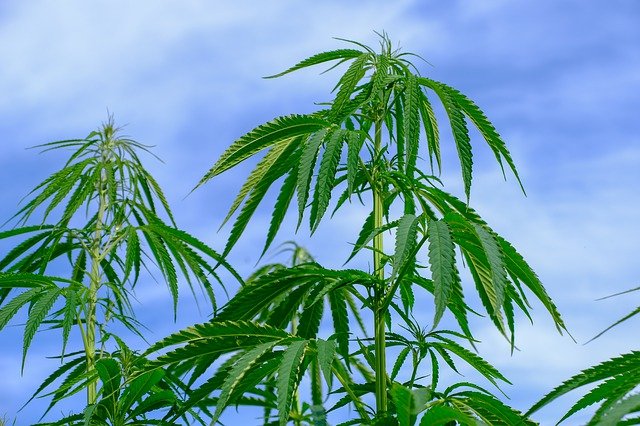
Hemp plant. Image by herbalhemp from Pixabay.

Those wanting to grow and process hemp in Minnesota in 2022 must apply for a license with the Minnesota Department of Agriculture (MDA) by April 30. To date, over 200 people have applied for an MDA license.

The online application for growers and processors can be found on the MDA website at www.mda.state.mn.us/industrialhemp. Along with the online form, first-time applicants need to submit fingerprints and pass a criminal background check.

This is the seventh year of the state’s Industrial Hemp Program. Last year, 425 people held licenses to grow or process hemp. Over 2,800 acres and 318,713 indoor square feet were planted in Minnesota.

There are several changes to the 2022 program. They include:

  • The tetrahydrocannabinol (THC) testing fee per grower sample has been reduced from $125 to $100 each.
  • Previously, growers were not invoiced for the cost of the first sample; however, fees now will be charged for each sample collected.
  • The MDA will begin inspecting processor locations. This was not done in the past.
  • The processor license fee remains at $250, but each processing location will cost $250. Therefore, the minimum cost of a processing license will be $500.

The fee changes bring Minnesota into better alignment with other states and will help adequately fund the MDA’s Hemp Program.

Anyone growing on tribal lands within a reservation’s boundaries or other lands under tribal jurisdiction (e.g., trust lands off-reservation) must obtain a license from the tribe or the USDA if the tribe does not have an approved hemp production plan.

Questions about the MDA’s Hemp Program should be sent to hemp.mda@state.mn.us or 651-201-6600. Read MDA’s full press release on this topic here.


MDA Offers Mini-Grant for Produce Growers

Minnesota produce farmers may be eligible for reimbursement of expenses that improve on-farm food safety systems, including water testing for generic E. coli and other on-farm food safety improvements, via a mini-grant program from the Minnesota Department of Agriculture (MDA).

The Produce Safety Mini-Grant will distribute a total of approximately $18,400, with awardees receiving up to $800 per farm. No matching funds are required.

To be eligible, applicants must be a Minnesota produce farmer that sells one or more of the following crops: leafy greens, apples, berries, cucumbers, green beans, melons, microgreens, mushrooms, onions, peppers, sprouts, summer squash/zucchini, and tomatoes.

Growers may be reimbursed for past expenses that occurred between September 30, 2020 – March 12, 2022, and future expenses taking place between March 13 – August 31, 2022.

Examples of eligible expenses include:

  • Supplies to build or purchase a portable handwashing station
  • Harvest totes
  • Water testing for generic coli
  • Consultation fees for developing an on-farm food safety plan

Additional information and the application are available on the MDA website at https://www.mda.state.mn.us/minigrant. Applications will be accepted through March 12, 2022, at 11:59 p.m. CST.


Sustainable Agriculture Grant Funding Available

The Minnesota Department of Agriculture (MDA) anticipates awarding up to $250,000 to demonstrate and publicize the energy efficiency, environmental benefit, or profitability of sustainable agricultural techniques or systems, from production through marketing.

The Agricultural Growth, Research, and Innovation (AGRI) Program’s Sustainable Agriculture Demonstration Grant program will accept applications through 4 p.m. on Thursday, December 9, 2021.

Applicants may request up to $50,000 per project. The first $25,000 does not need to be matched by the applicants. For requests between $25,000 and $50,000, applicants must provide a dollar-for-dollar match on the amount above $25,000.

Funding will be awarded in 2022. Projects must last two to three years and grantees must be willing to share what they learn with others.

Projects are published annually in the MDA’s Greenbook, which provides a summary of each project along with results, management tips, locations of previous projects, and other resources.

Minnesota farmers, educational institutions, individuals at educational institutions, and nonprofit organizations are eligible to apply. Applicants must be Minnesota residents, and projects must take place on Minnesota farms.

Proposals are required to be submitted through MDA’s online application system.

For more information, visit the AGRI Sustainable Agriculture Demonstration Grant webpage. Read MDA’s full press release on this topic here.


Applications Open for Minnesota’s 2022 Industrial Hemp Program

Image by Niksy from Pixabay.

Online applications are now open for anyone wishing to grow or process hemp in Minnesota in 2022. A license from the Minnesota Department of Agriculture (MDA) is required for individuals and businesses.

Applications must be submitted by April 30, 2022, and a license is good for the 2022 calendar year.

The application can be found on the MDA website. Along with the online form, first-time applicants need to submit fingerprints and pass a criminal background check.

There are several changes to the 2022 program. They include:

  • The tetrahydrocannabinol (THC) testing fee per grower sample has been reduced from $125 to $100 each.
  • Previously, growers were not invoiced for the cost of the first sample; however, fees now will be charged for each sample collected.
  • The MDA will begin inspecting processor locations. This was not done in the past.
  • The processor license fee remains at $250, but each processing location will cost $250. Therefore, the minimum cost of a processing license will be $500.

The fee changes bring Minnesota into better alignment with other states and will help adequately fund the MDA’s Hemp Program.

While the deadline to apply or renew is April 30, 2022, those actively growing hemp plants indoors past December 31, 2021, must renew their license before expiration at the end of the year. Questions about the MDA’s Industrial Hemp Program should be sent to hemp.mda@state.mn.us or 651-201-6600. Read MDA’s full press release on this topic here.


Research Grants Available from MDA

The Minnesota Department of Agriculture (MDA) is now accepting grant applications for applied crop research to improve the agricultural product quality, quantity, or value of Minnesota’s $10 billion crop industry.

The MDA anticipates awarding roughly $1,000,000 in total. Minnesota-based organizations with agricultural research capabilities may apply for the funding. Grants reimburse up to $250,000 of the cost of a project that will provide research products within seven years to benefit Minnesota agriculture, its producers, and associated industries.

Research projects with an outreach plan that addresses how activities or outcomes of this project meaningfully involves or informs underserved agricultural producers such as emerging farmers, and rural communities with limited economic opportunities will receive priority. In addition, preference will also be given to applicants researching crops that have limited access to other research funds.

Applications for the Agricultural Growth, Research, and Innovation (AGRI) Program Crop Research Grant received by 4 p.m. Tuesday, November 30, 2021 will be included in the competitive review process. The online application is available at the AGRI Crop Research Grant website.

To read the MDA’s full bulletin on this topic, click here.


MDA Offers Free Waste Pesticide Collections in NW Minnesota

The Minnesota Department of Agriculture (MDA) is hosting a series of free waste pesticide collections available to eleven northwestern Minnesota counties. Residents from Beltrami, Cass, Clay, Clearwater, Lake of the Woods, Kittson, Marshall, Pennington, Polk, Red Lake, and Roseau counties may attend any of the five collection sites in August.

The program accepts unwanted, unusable agricultural and consumer-type pesticides including insecticides, fungicides, herbicides, and rodenticides. However, crop oils, adjuvants, pesticide rinsate, fertilizer, treated seed, contaminated soil, and empty pesticide containers will not be accepted. The collections are open to farmers, homeowners, commercial pesticide applicators, golf courses, lawn care companies, structural pest control operators, and other pesticide users. No pre-registration for the MDA events is required.

The 2021 MDA collections will be held at the following locations and times:

  • August 3: West Central Ag, 334 1st St. SE, Ulen, 2–4 p.m.
  • August 4: CHS Ag Services, 3035 Highway 75 S, Crookston, 9–11 a.m.
  • August 4: CHS Ag Services, 624 3rd St. W, Thief River Falls, 2–4 p.m.
  • August 5: CHS Ag Services, 420 S Main, Warren, 9–11 a.m.
  • August 5: Nutrient Ag Solutions, 1275 Atlantic Ave. S, Hallock, 2–4 p.m.

Collection sites will accept up to 300 pounds of eligible product at no cost. The MDA requests that citizens call 651-214-6843 to provide advance notification if they wish to drop off more than 300 pounds of product. The MDA has collected over 8 million pounds of pesticides around the state since the Waste Pesticide Collection Program started in 1990.


Palmer Amaranth Found in Goodhue County

Farmers and agronomists encouraged to scout fields for invasive weed

A Palmer amaranth plant found in a Goodhue County corn field was not killed by a recent herbicide application. Photo courtesy Minnesota Department of Agriculture.

The Minnesota Department of Agriculture (MDA) has positively identified the invasive weed Palmer amaranth in Goodhue County.

After a crop consultant reported a suspected plant to the MDA, staff conducted a site visit and found the weed in two corn fields managed by one farmer. The MDA scouted fields surrounding the documented infestations and did not find any additional Palmer plants. It is unknown at this time how Palmer amaranth got into the two fields; however, the MDA is continuing to investigate potential sources.

An herbicide application stunted but did not kill the plants. A crew hand-pulled weeds in the two fields to eliminate any chance of seed production. The MDA will continue to work with the farmer, crop consultants, U of M Extension, and the County Agricultural Inspector to manage these infestations.

“This is a good example of the limits of herbicide on Palmer amaranth,” said Denise Thiede, MDA’s Seed Unit Supervisor. “If plants are allowed to reach a certain size, an herbicide application may not control them. That’s why we’re counting on farmers and crop consultants to report suspected plants. They are our best line of defense against Palmer amaranth.”

In Minnesota, Palmer amaranth is listed as a noxious weed and a prohibited weed seed. This means no Palmer amaranth is allowed in any seed offered for sale in Minnesota.

Palmer amaranth is resistant to multiple herbicides, can cause substantial yield losses, and greatly increase weed management costs in soybeans and corn.

The MDA is asking farmers and agronomists to take photos of suspicious plants, pull them out, and save them in plastic bags for genetic testing if needed. Report the find to the Minnesota Department of Agriculture’s Arrest the Pest line at 1-888-545-6684 or arrest.the.pest@state.mn.us.

MDA’s full press release on this topic can be found online, here. Find more information about Palmer amaranth on the MDA website, here.


Palmer Amaranth Found in Polk County

Palmer amaranth has long flowering spikes that are spiny. The plant can produce hundreds of thousands of seeds in a short time frame. Seeds mature within 10-12 days after pollination. Photo: MDA.

The Minnesota Department of Agriculture (MDA) has positively identified the invasive weed Palmer amaranth in Polk County. The confirmation came after the MDA inspected a field being used for the disposal of agricultural screenings.

The MDA collected a sample of the screenings material and determined by genetic testing that it was contaminated with Palmer amaranth seed. The field was scouted, and MDA staff found several dead Palmer amaranth plants on the field’s edge remaining from last year, suggesting the plants had grown and matured.

The landowner is working with the department to eradicate any of the weeds moving forward. At this time, the MDA believes the issue is isolated to only one field. The field and the surrounding area will be a priority for MDA field scouting this summer.

Since it was first discovered in the state in 2016, Palmer amaranth has been found in ten Minnesota counties, including Polk County. Most of the sites have been successfully eradicated and the remaining are being closely monitored.

In Minnesota, Palmer amaranth is listed as a noxious weed and a prohibited weed seed. This means no Palmer amaranth is allowed in any seed offered for sale in Minnesota.

Palmer amaranth is resistant to multiple herbicides, can cause substantial yield losses, and greatly increase weed management costs in soybeans and corn.

MDA’s full press release on this topic can be found online, here. Find more information about Palmer amaranth on the MDA’s website, here.


USDA Approves Minnesota’s Hemp Plan

Image by NickyPe from Pixabay.

The U.S. Department of Agriculture (USDA) has approved the state of Minnesota’s revised hemp production plan. The plan governs the production and regulation of hemp in Minnesota and needed federal approval as part of USDA’s U.S. Domestic Hemp Production Program. 

This will be the first year Minnesota’s program will be operating under a new, federally-approved state plan that governs production and regulation.

Some changes in the revised plan include:

  • A hemp crop must be tested no more than 30 days before harvest to ensure the plants fall below the 0.3% total tetrahydrocannabinol (THC) level. This is an increase from the previous 15-day testing window.
  • Random sampling of fields will now be based on risk factors of the crop, allowing for more inspection flexibility.
  • Remediation is allowed if hemp plants exceed the 0.3% total THC threshold but test under 1% total THC.

A grower cannot be assessed more than one negligent violation in a year. The previous plan allowed an unlimited number of assessed violations. The penalty for violations is unchanged. Those with three negligent violations in five years will be ineligible for a license for five years.

A license from the Minnesota Department of Agriculture (MDA) is required for individuals and businesses to grow, process, research, or breed hemp in the state. Questions about the MDA’s Industrial Hemp Program should be sent to hemp.mda@state.mn.us or 651-201-6600. MDA’s full press release on this topic can be found online here.